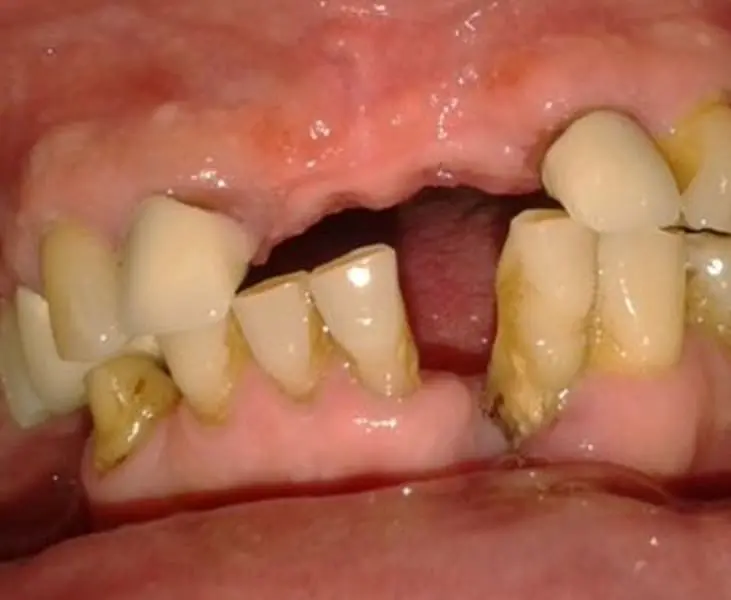
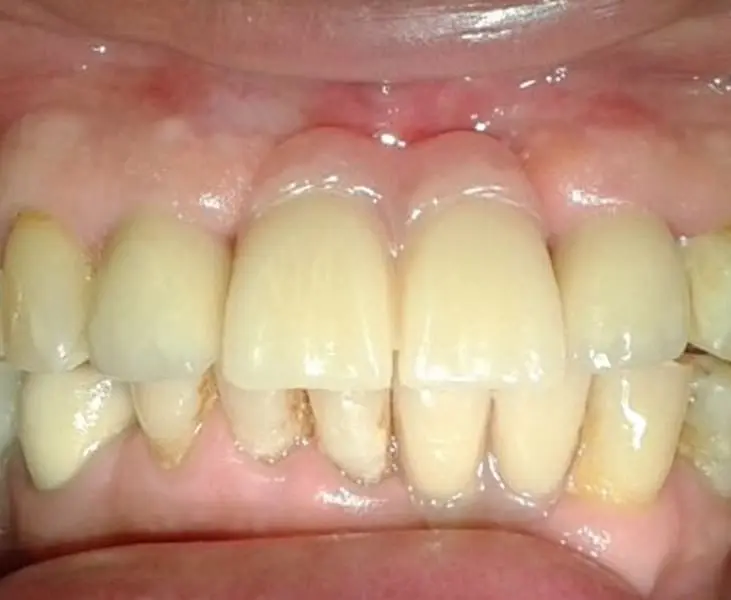
Bacterial plaque buildup due to poor oral hygiene is the primary cause of gum problems. This is a sticky, colourless film on the teeth that causes tartar, pockets between the gums and teeth and gum recession.
These issues can also be caused by smoking, chewing tobacco, hormonal changes, certain diseases and medication. Gum disease can exhibit these common signs and symptoms:
- Red, swollen or tender gums
- Bleeding gums, especially during brushing or flossing
- Persistent bad breath or a bad taste in the mouth
- Receding gums or teeth appearing longer
- Shifting or loose teeth
- Changes in the bite or the way the teeth fit together
How Is Gum Disease Treated?
The treatment options for periodontal disease depend on its severity. In its early stage (gingivitis), the treatment required will likely be non-surgical. This includes professional cleaning by our dental hygienist to remove plaque, good oral hygiene practices and regular dental visits, which may be sufficient to reverse the condition and improve your dental health.
In more advanced cases, oral surgery is usually required to treat periodontal disease, such as flap surgery, bone grafting, gum grafts or guided tissue regeneration. Dental implants may be recommended after treatment to replace lost teeth, restoring your bite and enhancing the appearance of your smile.
Your treatment plan will be determined by your London periodontist, based on your particular case.
Load More